Growing up in West Texas, Jane Little Botkin didn’t have designs on becoming a beauty queen. But not long after joining a pageant on a whim in college, she became the first protégé of El Paso’s Richard Guy and Rex Holt, known as the “Kings of Beauty”—just as the 1970s counterculture movement began to take off.
A pink, rose-covered gown—a Guyrex creation—symbolizes the fairy tale life that young women in Jane’s time imagined beauty queens had. Its near destruction exposes reality: the author’s failed relationship with her mother and her parents’ failed relationship with one another. Weaving these narrative threads together is the Wild West notion that anything is possible, especially do-overs.
The Pink Dress awakens nostalgia for the 1960s and 1970s, the era’s conflicts and growth pains. A common expectation that women went to college to get “MRS” degrees—to find a husband and become a stay-at-home wife and mother—often prevailed. How does one swim upstream against this notion among feminist voices that protest “If You Want Meat, Go to a Butcher!” at beauty pageants, two flamboyant showmen, and a developing awareness of self? Torn between women’s traditional roles and what women could be, Guyrex Girls evolved, as did the author.
PRAISE FOR THE PINK DRESS:
"The memoir is an engaging time capsule of trendsetting southwestern beauty pageantry. A revealing look behind the glamour and illusion of beauty queens." ~Kirkus Reviews
"The Pink Dress isn't a beautiful walk down memory lane. It's a wild ride through the turbulent 1970s, West Texas style. Here she is, Janie Botkin, taking the town by storm." ~Johnny D. Boggs, nine-time Spur Award winner and author of upcoming books Longhorns East and Bloody Newton
National award–winning author Jane Little Botkin melds personal narratives of American families, often with compelling stories of western women. A member of Western Writers of America since 2017, Jane judges entries for the WWA's prestigious Spur Award, reviews new releases, and writes articles for various magazines. Her books have won numerous awards, including two Spur Awards, two Caroline Bancroft History Prizes, and the Barbara Sudler Award; she has also been a finalist for the Women Writing the West’s Willa Literary Award, High Plains Book Award, Oklahoma Book Award, and Foreword Review and Sarton Book awards, both in women’s studies. She is currently working on a biography of Mary Ann (Molly) Goodnight titled The Breath of a Buffalo, A Biography of Mary Ann Goodnight. A lifelong Texan, Jane said she had no idea Texas grew native trees until she moved from El Paso, to Dripping Springs near Austin! Now Jane blissfully escapes into her literary world in the remote White Mountain Wilderness near Nogal, New Mexico–a hop, skip, and a jump to El Paso.

“Discharged from a hospital just means you’re not dead.” These words of Ralph B. Lilly, M.D., describe his early struggle to recover from a traumatic brain injury. Lilly was a forty-four-year-old practicing neurologist sitting on his motorcycle at a red light when a drunk driver rear-ended him in 1980. In the ICU, after regaining consciousness and being told what happened, he asked, “What’s a hospital? What’s a motorcycle?” This tragic experience transformed his life and his approach to his neurology practice: doctors treat those with brain injury; but loved ones heal them.
Second Lives: The Journey of Brain Injury Survivors and Their Healersis written by Dr. Lilly and Diane F. Kramer. After his death in 2021, Kramer completed the book with the assistance of Lilly’s wife Joyce Stamp Lilly. This memoir weaves together Ralph Lilly’s experience with a collage of stories about his patients and their healers. After his recovery, Lilly retrained in the emerging field of behavioral neurology, which focuses on behavior, memory, cognition, and emotion after brain injury.
His clinical skills and expert witness testimony were sought by physicians, survivors, families, and attorneys to secure the best “second life” for survivors. His many patients marveled at his uniquely compassionate approach: “What doctor gives you his cell number and says call any time?” Lilly’s pioneering career spanned forty years from Brown University’s Butler Psychiatric Hospital in Rhode Island to Nexus Health System and private practice in Houston, Texas. He treated ER and hospital inpatients whose loved ones were in acute quandary, as well as outpatients who’d long given up finding a doctor who knew how to help. Lilly’s memoir is full of heart, not science, and will provide insight to general readers, family, and friends of patients with brain injury, as well as those who treat them.
His narration is unintentionally poignant, often punctuated by wry humor. He generously incorporates the words of his patients and their families in telling their stories. Their gratitude for his care is profound. As one former patient said, “Without Dr. Lilly, I’d be dead or in jail.
A neurologist for over half a century, Ralph B. Lilly, MD had a passion for learning and teaching. A traumatic brain injury in 1980 shifted his focus from general neurology to behavioral neurology, the study of how brain injury affects behavior. After completing a fellowship in neurobehavior at the University of California, Los Angeles, he served as a clinical assistant professor with the Brown University Program in Medicine in Providence, Rhode Island, consulting with psychiatrists looking for possible neurological causes for their patients’ psychiatric symptoms. In Texas, he worked joined what is now Nexus Health Systems and became a clinical assistant professor at The University of Texas in Houston. Lilly focused his life’s work on treating brain-injury survivors and counseling their families, who were victims in their own right. He saw these “healers” as instrumental in guiding the injured loved one to a “new life.” He practiced in Arizona, Rhode Island, Massachusetts, Texas, and wherever he was called to help. Before his death in 2021, Lilly lived in Washington, Texas, with his wife, Joyce, three dogs, six cats, and two horses.
Diane F. Kramer retired from the counseling and psychology departments of Austin Community College in 2008 and began writing personal essays, family histories, and fiction. As a volunteer with the Brenham Animal Shelter, she wrote a weekly column on animal welfare for The Brenham Banner Press. Her writing has also appeared in Alamo Bay Press anthologies and blogs Peace through Pie and Drash Pit. She currently writes website copy and press releases for Brenham Lifetime Learning and the Read of Washington County. She lives with her husband and their rescue dog and cat in rural Texas.
In this intimate rendering of a relationship, we learn how deceptive surface impressions can be.
Leon Hale, author of Bonney’s Place, was sixty years old, a “country boy” who wrote about rural Texans with humor and sensitivity in his popular column for The Houston Post and, later the Houston Chronicle. Babette Fraser at thirty-six was a child of privilege, a city girl educated abroad, struggling in her career while raising a young son. No one thought it could work.
Even Hale himself held serious doubts. But it did endure. The interior congruencies they discovered through a long and turbulent courtship knit them tightly together for the rest of his life.
And when he died during the Pandemic isolation period, searing levels of grief and doubt threatened Babette’s understanding of the partnership and marriage that had sustained her for forty years. Had he really been the person she thought he was? Had he kept secrets that would forever change her view of him?
In candid, evocative prose, she explores the distorted perceptions that often follow the death of a cherished spouse, and the loving resolution that allows life to go on.
Babette Fraser Hale is the author of A Wall of Bright Dead Feathers, 2022 winner of the debut fiction award from the Texas Institute of Letters. Her stories have received notice from Best American Short Stories, 2015 and the Meyerson Award from Southwest Review. In addition to writing fiction, Babette has been a magazine feature writer, columnist, contributing editor, book editor, and publisher. She lives in Texas.
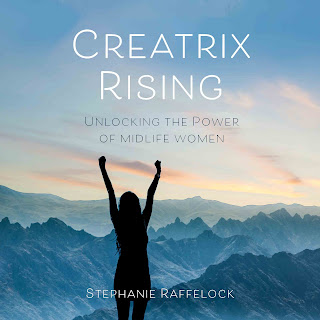
Ever since Eve was banned from the garden, women have endured the oftentimes painful and inaccurate definitions foisted upon them by the patriarchy. Maiden, mother, and crone, representing the three stages assigned to a woman’s life cycle, have been the limiting categories of both ancient and modern (neo-pagan) mythology. And one label in particular rankles: crone. The word conjures a wizened hag—useless for the most part, marginalized by appearance and ability.
None of us has ever truly fit the old-crone image, and for today’s midlife women, a new archetype is being birthed: the Creatrix.
In Creatrix Rising, Raffelock lays out—through personal stories and essays—the highlights of the past fifty years, in which women have gone from a quiet strength to a resounding voice. She invites us along on her own transformational journey by providing probing questions for reflection so that we can flesh out and bring to life this new archetype within ourselves. If what the Dalai Lama has predicted—that women will save the world—proves true, then the Creatrix will for certain be out front, leading the pack.
"We leave one beauty behind us for another that rises with the moon."
Almost exactly a year after reading CREATRIX RISING (that review below), I listened to it. The author's outstanding narration adds a whole new layer of richness to the book. I found myself noting all new passages and absorbing new truths that apply to the now fifty-five-year-old me. We change a lot in a year!
One stand-out again is that Raffelock reminds us that we should be living life on our own terms. I realized that I am mildly uncomfortable with this truth, but I'm doing it. I am learning that it's okay to do things for me when it makes others -friends, family, business associates - who are accustomed to me living my life on their terms, unhappy. (What I have found is that they get over it.)
I am so impressed with Raffelock's level of self-awareness and her ability to self-assess. I am pretty good with these skills, too, but Raffelock goes one step better -- she takes action. #goals I know I'll get there.
As I have revisited chapters in my print copy, I will revisit them on audio to hear Stephanie Raffelock, my own personal cheerleader, coaching me in the right direction.
2021 Mini-Review:
We weave together tales of our past and present, helping us make sense of the ideal we strive for: the freedom to do life on our own terms.
Reading Stephanie Raffelock's book -- part memoir, part call to action -- was so powerful and empowering. Her fascinating life stories, and how she learned and grew from them, force the reader to reflect upon her own life stories and the people who helped mold her into what she is today. Raffelock reminds us that we can break those molds at any time or stretch them to fit who we want to be. But more importantly, Raffelock shows how women all have the potential to evolve and take their rightful places in the world by throwing out the horrible accepted norms and definitions of mid-life women.
I'm past the mid-life point, and Raffelock's pointed (and more subtle) questions she poses for self-reflection are ones I will keep revisiting as I continue to reinvent myself and grow.
Highly recommend CREATRIX RISING for ages 40+ women -- and for the men who are in their lives.
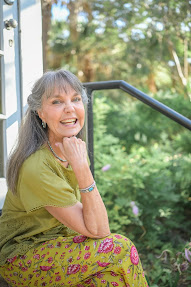
Stephanie Raffelock is an author, speaker, and voiceover artist. She is the editor of the anthology, Art in the Time of Unbearable Crisis (2022). Stephanie is the author of Creatrix Rising, Unlocking the Power of Midlife Women (2021) and she penned the award-winning book, A Delightful Little Book on Aging (2020). She lives in Austin, Texas, with her husband and a goofy Labrador Retriever named Mickey.
Law Enforcement Biography / Memoir / Ethics & Morals
Publisher: Creative Texts Publishers
Pages: 250 pages
Publication Date: June 7, 2022
You know, I never saw an officer, an EMT, a fireman, or an ER crew ask anyone what their politics were and then refuse to care for them because of their answer. The color of skin pigment, the last name, the amount of money in a bank account, none of that mattered.
All that mattered was someone needed help, and they had the skills as well as the burning desire to do so.
Yes, they are only human and internally flawed and prejudiced as any other. But their true nature, their crowning glory in mortal life, is their ability to rise above those flaws and prejudices when called upon.
In a world of hungry, destructive wolves, they stand as the sheepdog who serves and protects the flock.
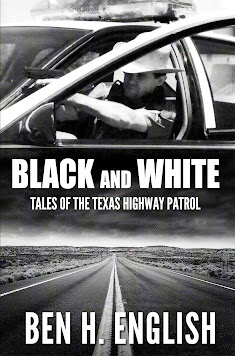
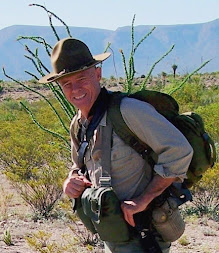
Ben H. English is an eighth-generation Texan who grew up in the Big Bend. At seventeen, he joined the Marines, ultimately becoming a chief scout-sniper as well as an infantry platoon sergeant. Later he worked in counterintelligence and traveled to over thirty countries on four continents.
At Angelo State University, he graduated Magna Cum Laude along with other honors. Afterwards, Ben had a career in the Texas Highway Patrol, holding several instructor billets involving firearms, driving, patrol procedures, and defensive tactics.
After retirement, he decided to try his hand at writing. His first effort, Yonderings, was accepted by a university press and garnered some awards. His second, Destiny’s Way, led to a long-term, multi-book contract. This was followed by Out There: Essays on the Lower Big Bend, The Uvalde Raider, and now Black and White: Tales of the Texas Highway Patrol.
His intimate knowledge of what he writes about lends credence and authenticity to his work. Ben knows how it feels to get hit and hit back, or being thirsty, cold, wet, hungry, alone, or exhausted beyond imagination. Finally, he knows of not only being the hunter but also the hunted.
Ben and his wife have two sons who both graduated from Annapolis. He still likes nothing better than grabbing a pack and some canteens and heading out to where few others venture.
CLICK TO VISIT THE LONE STAR LITERARY LIFE TOUR PAGE FOR DIRECT LINKS TO EACH POST ON THIS TOUR, UPDATED DAILY, OR VISIT THE PARTICIPATING BLOGS DIRECTLY:
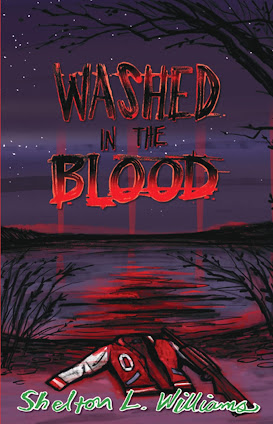
The true story behind the Kiss and Kill murder in Texas in 1961. Author Larry King says: Washed in the Blood is a page-turning read about the time--early 1960s--and place--Odessa, Texas--during its rowdy oil boom days when violence often rode the range. It is at once an examination of local mores and foibles, piety and hypocrisy and an inside-look at the famed 'Kiss and Kill' murder of a 17-year-old would-be actress, Betty Jean Williams, whose ghost is said to haunt the Odessa High School campus to this very day.
HALL WAYS MINI-REVIEW: Washed in the Blood is a very quick story, coming in at just under 200 pages, but readers will be invested -- particularly if they know West Texas. WASHED IN THE BLOOD vacillates between being a coming-of-age, 1960s memoir, glory-days-of-football story and an exploration of, social commentary about, and reflection upon the murder of the author's cousin, Betty -- with a splash of courtroom drama and eye-witness testimony thrown in for good measure.
“No one noticed that I was a completely different person.”
More than anything, this book feels personal. Writing and telling Betty's story is clearly cathartic for the author, but also clear is that closure eludes him, even years after the murder. He sometimes speaks straight to Betty, and we even hear Betty speak (via her letters). Her words are painful to hear, and Williams doesn't shy away from sharing the impact of those words on him and all the questions that linger.
Overall, Washed in the Blood is an engaging book that covers a lot of ground and leaves the reader thinking. And I think the book would translate very well to the screen -- and maybe, just maybe that will happen.
*Be sure to get the version featured on this tour as it's newly edited and updated with extra content.*
Shelton L. Williams (Shelly) is founder and president of the Osgood Center for International Studies in Washington, DC. He holds a PhD from Johns Hopkins School of Advanced International Studies and he taught for nearly 40 years at Austin College in Sherman, Texas. He has served in the US Government on 4 occasions, and he has written books and articles on nuclear proliferation. In 2004 he began a new career of writing books on crime and society. Those books are Washed in the Blood, Summer of 66, and now the three books in the Covey Jencks Mysteries series. All firmly prove that he is still a Texan at heart.